Getting Started with Trezor: A Beginner's Guide to Secure Crypto Wallet Setup at Trezor.io/start
In the fast-paced world of cryptocurrency, securing your digital assets is paramount. If you're looking to trade, send and receive crypto, set up price alerts, and explore more advanced features, Trezor hardware wallets offer a reliable solution. Trezor.io/start is your gateway to setting up this secure ecosystem. This guide walks you through the essentials, helping you get up and running with confidence. Whether you're a newbie dipping your toes into Bitcoin or an experienced trader managing multiple altcoins, Trezor provides the tools you need for safe and efficient crypto management.
What is Trezor and Why Choose It for Crypto Activities?
Trezor is a leading hardware wallet brand developed by SatoshiLabs, designed to keep your cryptocurrencies offline and protected from online threats like hacking and phishing. Unlike software wallets on your phone or computer, Trezor stores your private keys on a physical device, adding an extra layer of security. This makes it ideal for individuals who frequently trade, send, or receive crypto without compromising safety.
At its core, Trezor supports over 1,000 cryptocurrencies, including major ones like Bitcoin (BTC), Ethereum (ETH), Litecoin (LTC), and various ERC-20 tokens. The Trezor.io/start page is specifically tailored for new users, guiding you through the initial setup process. Why opt for Trezor? It's user-friendly yet robust, with features that extend beyond basic storage. You can integrate it with trading platforms, monitor market prices, and even set alerts for price fluctuations—all while keeping your funds air-gapped from the internet.
For those venturing into trading, Trezor's compatibility with exchanges like Binance or Coinbase allows seamless transfers. Sending and receiving crypto is straightforward, with built-in verification to prevent errors. Plus, the price alert system in the accompanying software keeps you informed about market shifts, helping you make timely decisions without constant monitoring.
Step-by-Step Setup Guide: Navigating Trezor.io/start
Getting started couldn't be simpler. Head to Trezor.io/start, and you'll find a clean, intuitive interface that prioritizes ease of use. First, ensure you have your Trezor device handy—models like Trezor Model T or Trezor One are popular choices. If you haven't purchased one yet, the site offers direct links to buy authentic hardware, avoiding counterfeit risks.
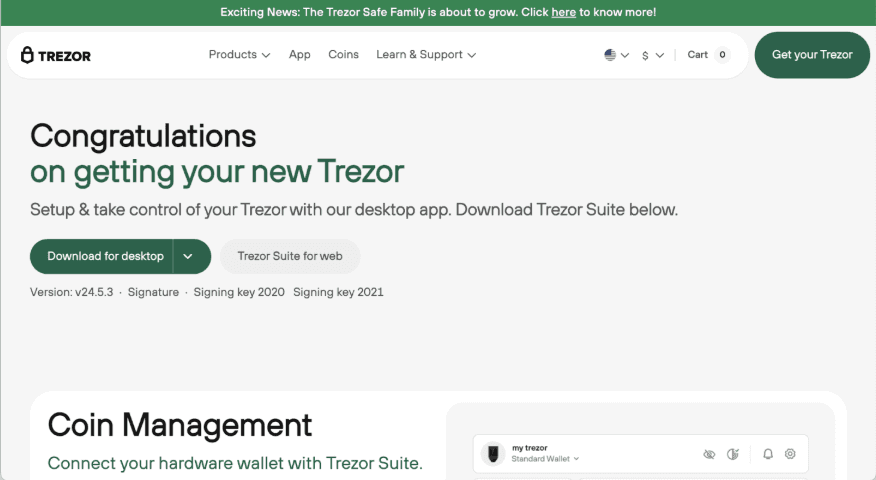
Once on the page, download Trezor Suite, the official desktop app that serves as your control center. This software is available for Windows, macOS, and Linux, ensuring broad compatibility. After installation, connect your Trezor device via USB. The setup wizard will prompt you to create a new wallet or recover an existing one using a seed phrase—a 12- or 24-word backup code that's crucial for recovery.
Security is emphasized here: Write down your seed phrase on paper (never digitally) and store it safely. Trezor.io/start includes tips on best practices, like using the device's screen to verify transactions, which prevents man-in-the-middle attacks. Within minutes, your wallet is initialized, ready for funding.
Now, for trading enthusiasts: Link your Trezor to supported exchanges through the Suite. This integration lets you authorize trades directly from your hardware wallet, ensuring private keys never leave the device. Sending crypto? Select the coin, enter the recipient's address, and confirm on the Trezor screen. Receiving is just as easy—generate a wallet address and share it securely.
Trading Crypto with Trezor: Secure and Efficient Strategies
Trading cryptocurrency involves buying low and selling high, but security often takes a backseat in the excitement. Trezor changes that by allowing you to trade without exposing your assets to exchange hacks. Through Trezor Suite, you can connect to third-party services like Invity for direct buys and sells using fiat or other cryptos.
For active traders, the wallet's multi-account feature lets you organize holdings—say, one account for long-term HODLing and another for day trading. This separation minimizes risks. Moreover, Trezor's support for decentralized exchanges (DEXs) like Uniswap via WalletConnect means you can swap tokens securely from your device.
Price alerts are a game-changer for traders. In Trezor Suite, set notifications for specific price thresholds on coins like BTC or ETH. Get emails or app alerts when Bitcoin hits $50,000 or Ethereum dips below $2,000. This feature helps you react quickly to market volatility, whether you're scalping or swing trading.
Beyond trading, Trezor facilitates staking for proof-of-stake coins, earning passive income while your assets remain secure. It's perfect for users who want more than just storage—think of it as a multifaceted tool for the modern crypto investor.
Sending and Receiving Crypto: Best Practices with Trezor
One of Trezor's standout features is its seamless send and receive functionality. To send crypto, open Trezor Suite, select your account, and input the amount and address. The device requires physical confirmation, adding a tactile security layer that software wallets lack. This reduces errors, like sending to the wrong chain.
Receiving is equally straightforward. Generate a unique address for each transaction to enhance privacy. Trezor supports segwit addresses for Bitcoin, which lower fees and speed up confirmations. For users dealing with multiple currencies, the wallet's coinjoin feature (for privacy-focused mixing) ensures transactions aren't easily traceable.
If you're receiving from an exchange, always double-check the address on your Trezor screen. This practice thwarts clipboard malware that swaps addresses. For larger transfers, use the test send option—transfer a small amount first to verify.
Trezor also integrates with mobile apps via Bluetooth on certain models, allowing on-the-go sending and receiving. This mobility is great for traders who need to act fast during market hours.
Advanced Features: Price Alerts, Portfolio Tracking, and More
Trezor isn't just about basics; it's packed with extras for comprehensive crypto management. Price alerts, as mentioned, keep you ahead of the curve. Customize them per coin, with options for percentage changes or absolute values.
Portfolio tracking in Trezor Suite provides a dashboard view of your holdings, complete with real-time values and historical charts. See how your BTC stack performs against ETH or track overall portfolio growth. This insight is invaluable for rebalancing during trades.
For privacy buffs, features like Tor integration anonymize your connections. NFT enthusiasts can store and manage digital collectibles securely. And if you're into DeFi, Trezor's hardware signing supports dApps, letting you interact with protocols like Aave or Compound without risk.
Security audits and open-source code mean Trezor is transparent and community-vetted. Regular firmware updates via Trezor.io/start ensure you're protected against emerging threats.
Tips for Maximizing Your Trezor Experience
To get the most out of Trezor, enable passphrase protection for an extra security layer—it's like a second password. Regularly back up your seed phrase and test recovery. For trading, combine Trezor with market analysis tools, using alerts to time entries and exits.
Avoid common pitfalls: Never share your seed phrase, and buy only from official sources to dodge fakes. If you're sending large sums, split transactions to mitigate risks.
In summary, Trezor.io/start opens the door to a secure, feature-rich crypto world. From trading and transfers to alerts and beyond, it's designed for users who demand both convenience and protection. Dive in today and take control of your digital finances.